
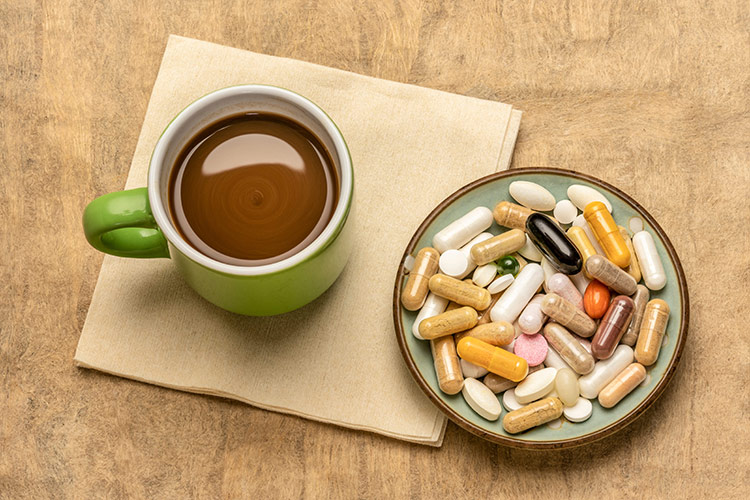
Many of us start the day with a cup (or more) of coffee or tea. We might also reach for another cup or an energy drink for an afternoon pickup. There’s nothing wrong with that for most adults, as long as you’re staying under 400 mg per day (or 200 mg for pregnant women). But if you’re taking your vitamin supplements at the same time, you might be canceling out some of the benefits.
Lower Absorption, Higher Excretion
Tannins and caffeine, which are found in both coffee and tea, can reduce the absorption of certain vitamins and minerals. Caffeine can also act as a mild diuretic, which means it increases how often you urinate, and that can flush out water-soluble minerals. Drinking coffee and tea can impact absorption and increase excretion of:
- Iron. Studies show that taking caffeine with an iron supplement or an iron-rich meal can reduce iron absorption by 40-90% (depending on the specific parameters of the studies).
- Magnesium and Zinc. Caffeine doesn’t affect zinc or magnesium as much as iron, but it does inhibit absorption.
- B Vitamins and Vitamin C. Caffeine can decrease the levels of water-soluble vitamins like B and C over time.
- Calcium. Caffeine can inhibit calcium absorption and increase calcium excretion by a small amount.
- Vitamin D. Caffeine can reduce the number of vitamin D receptors in certain cells, which can lead to low vitamin D levels over time.
The effect of caffeine on these nutrients is pretty small. However, it can add up over time, and if you’re taking supplements at the same time as caffeine, the caffeine will make some of those supplements less effective.
Timing Supplements and Caffeine
For supplements affected by caffeine, research suggests taking them 1 to 2 hours before or after coffee, tea, or other caffeine sources. That will space them out far enough from the caffeine that it shouldn’t interfere with absorption.
Another supplement that you shouldn’t take with caffeine is melatonin. Coffee helps you wake up and melatonin helps you sleep, so they work at cross purposes if you take them too close together. Drinking caffeine close to bedtime can impact your sleep, so experts recommend no caffeine within 6 to 8 hours of the time you plan to go to sleep. If you plan to take melatonin, you can take it about an hour before going to sleep.
For personalized advice about supplements, caffeine, and other nutrition questions, you can schedule an appointment with one of our nutrition coaches. They’ll work with you to develop a nutrition plan that’s right for you, including guidance on supplements and drinks as well as food.