
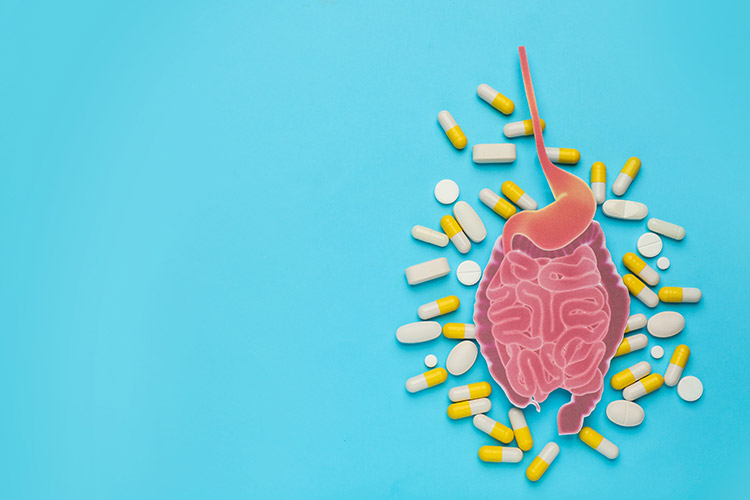
Digestive enzymes are an essential part of the digestive process that help our bodies break down and extract nutrients from food. Your body makes these enzymes naturally, mostly in the pancreas but also in the mouth, stomach, and small intestine. You can also get enzymes from some foods or from supplements.
If you’re low on digestive enzymes, it can cause gastrointestinal (GI) issues. When you feel digestive distress, it can be tempting to try a bottle of over-the-counter digestive enzymes hoping they’ll provide a quick fix (I’ve done that myself, if we’re being honest). But don’t reach for that supplement bottle just yet.
Types of Enzymes
There are lots of different enzymes, and they play different roles in digestion. Here are some of the common digestive enzymes:
- Amylase and diastases break down carbs and starches.
- Protease breaks down proteins.
- Lipase breaks down fats.
- Lactase breaks down lactose.
- Sucrase and invertase break down sucrose.
A wide variety of medical conditions can lead to your body being low on one or more of these enzymes. For example, people with lactose intolerance do not make enough lactase to break down the natural sugars in dairy products, leading to GI issues. In individuals with exocrine pancreatic insufficiency (EPI), the pancreas does not produce enough enzymes like amylase, protease, and lipase.
Enzyme Supplements
There are plenty of digestive enzyme supplements available over-the-counter and some by prescription. There are studies showing that most people don’t have any trouble taking these supplements and that supplemental enzymes can ease the symptoms of GI issues. However, medical professionals still urge caution since supplements are not regulated by the FDA and there aren’t large-scale studies testing their safety or effectiveness.
If you’re having GI issues, guessing which enzymes you need and in what dose can be tricky on your own. It’s always a good idea to discuss new supplements with your doctor before you start taking them, especially if you’re taking medication that could interact with those supplements. Additionally, if you have persistent GI issues, a doctor can help you determine the root cause and come up with a course of treatment, which may involve prescription enzyme replacement therapies or over-the-counter supplements.
Foods Containing Digestive Enzymes
There are plenty of foods you can eat that naturally contain digestive enzymes. A lot of enzyme supplements are derived from animal sources, but there are plenty of plant-based enzyme sources that you can add to your diet.
- Papaya, pineapple, kiwi, and ginger contain proteases, which help break down proteins.
- Mango and banana contain amylases, which help break down carbohydrates.
- Avocado contains lipases, which help break down fats.
- Raw honey contains several digestive enzymes, including diastases, amylases, invertases, and proteases.
- Fermented foods, including kefir, sauerkraut, and miso, contain many digestive enzymes, including lipase, proteases, and lactase.
If you’re thinking of changing your diet or adding supplements to improve digestion or combat GI issues, working with a nutrition professional makes things much easier. When you work with one of our nutrition coaches, the consultant will help you create and understand a personalized nutrition plan that fits your unique needs and aligns with your goals.