If you live in the United States, you’ve probably heard about the new Dietary Guidelines for Americans (DGA) and seen the upside-down food pyramid. Updates to these guidelines happen every five years and guide professional nutrition recommendations as well as provide general tips for healthy eating.
You might have some questions about these new guidelines, particularly since they’ve been in the news so much. Here’s a quick guide, with additional resource links, to help you understand the new dietary guidelines.
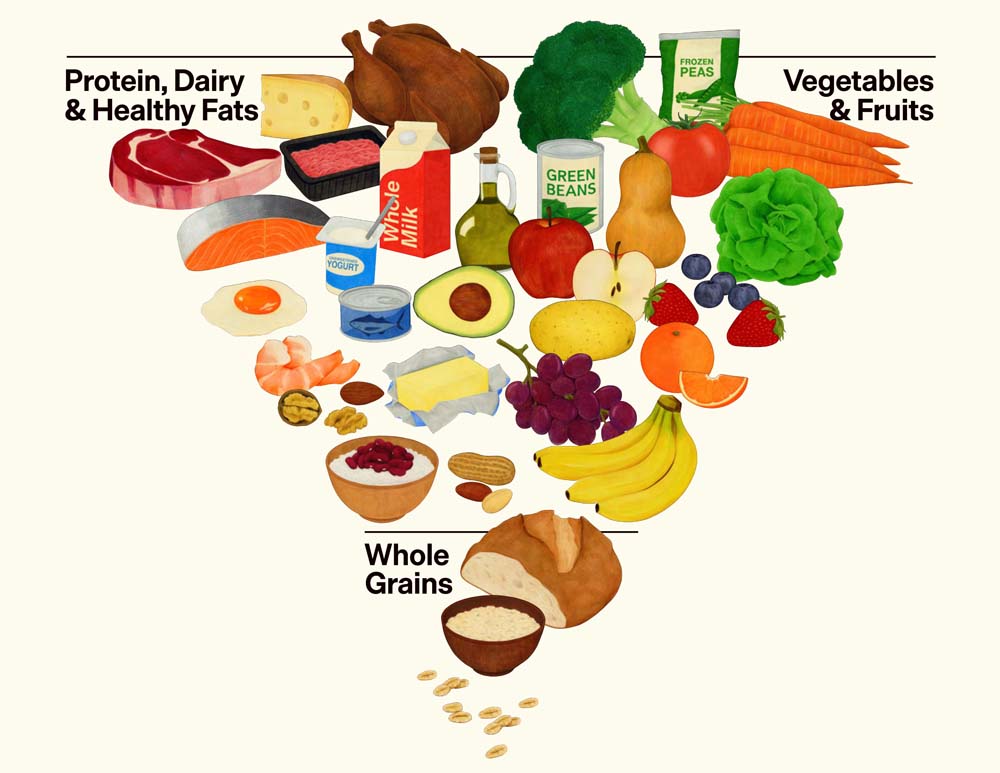 Food Pyramid History
I’m going to date myself here by saying I grew up with the classic 1992 food pyramid. Later, when I was getting my Master’s degree, I worked with my university’s office of institutional research and learned how challenging it is to create easily understood visuals to communicate large amounts of data. It’s no wonder the food pyramid has changed so much over the years!
According to three Harvard faculty members who served on the DGA Advisory Committee prior to the new guidelines’ development, the updated 2025-2030 guidelines are largely consistent with previous guides. Some recommendations haven’t changed, including limits on saturated fats and sodium, an emphasis on eating whole foods, and the number of recommended servings for most of the different food groups (e.g., produce, whole grains, dairy, oils).
Summary of the Changes
One major change from previous dietary guidelines is the emphasis on protein. As you might know as a fitness enthusiast and reader of this blog, protein is an essential macronutrient. Our bodies use protein in a variety of ways, and athletes often take supplemental protein or eat higher-protein diets to help aid in muscle building and recovery.
The Harvard experts previously cited point out that the amount of protein recommended by the new guidelines aligns with current scientific research. They caution, however, that emphasizing animal-based protein over plant-based protein deviates from scientific findings. They also caution that new recommendations to eat more red meat and full-fat dairy may make it challenging to stick to guidelines limiting saturated fats.
Other changes include stricter recommendations for limiting sugar intake and avoiding highly processed foods, which experts generally agree is good advice. The switch from a specific recommended limit on alcohol consumption to a more vague recommendation to drink less has received more criticism from experts.
Using the New Food Pyramid
Ultimately, dietary guidelines can be a starting point for healthy eating, but individuals are still in charge of their own dietary choices. Nutrition is also highly individual. Age, gender, activity level, allergies, medical conditions, family history, religion, and other factors all influence the foods we can and should eat.
One way to come up with a good dietary plan that’s specific to your needs is to meet with a nutrition coach. Nutrition accounts for over 80% of your fitness and health results, so making healthy food choices should be a priority. When you work with a nutrition coach here at Extreme Studio Performance, we’ll thoroughly review your current concerns, dietary and lifestyle habits, and relevant medical factors to develop recommendations aligned with your needs and goals. Contact us today to learn more or set up a facility tour.